5 DevOps Books Worth Reading in 2026
There's no shortage of DevOps books out there. The problem is figuring out which ones are actually worth your time versus which ones are just rehashing the same "what is CI/CD" content you've already read a hundred times.
Here are five books that I keep coming back to and recommending to engineers at every level. Some are free, some aren't, but all of them have shaped how I think about building and running systems.
TLDR
| Book | Best For | Price |
|---|---|---|
| Linux DevOps eBook Bundle | Getting started with Linux and DevOps fundamentals | Pay what you want |
| Site Reliability Engineering | Understanding how to run reliable systems at scale | Free |
| Kubernetes in Action | Learning Kubernetes from the ground up | Paid |
| The Phoenix Project | Understanding DevOps culture and mindset | Paid |
| Cloud Native DevOps with Kubernetes | Running production K8s workloads | Paid |
1. Linux DevOps eBook Bundle
Author: Bobby Iliev
Best for: Beginners who want a clear path from Linux basics to infrastructure management
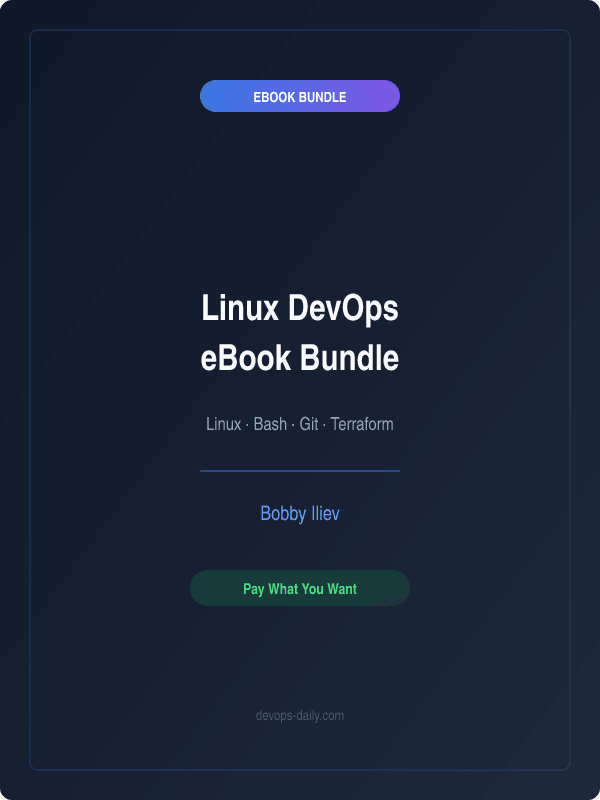
If you're starting your DevOps journey, the biggest hurdle is knowing where to begin. This bundle solves that by walking you through Linux fundamentals, Bash scripting, Git, and Terraform in a logical sequence. Each book builds on the previous one.
What makes this different from random blog posts and YouTube tutorials: it's structured as a learning path. You start with basic Linux commands, move into shell scripting, learn version control with Git, and then graduate to infrastructure as code with Terraform. No jumping between unrelated topics.
The pay-what-you-want pricing means there's zero risk in picking it up. Even if you've been working with Linux for a while, the Terraform sections are worth it on their own.
Get the Linux DevOps eBook Bundle on Leanpub
Want to practice your Linux skills? Try our Linux Server Setup exercises or test yourself with the Linux quiz.
2. Site Reliability Engineering
Authors: Betsy Beyer, Chris Jones, Jennifer Petoff, Niall Murphy (Google)
Best for: Anyone who wants to understand how large-scale systems actually stay running
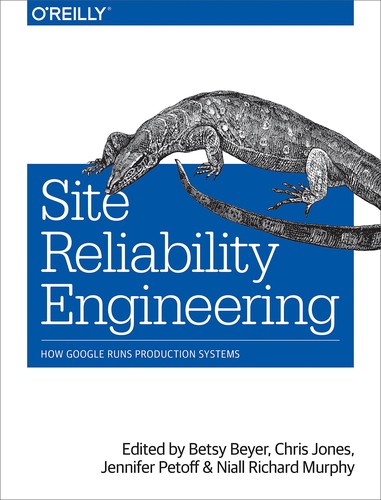
This is the book that defined SRE as a discipline. Google released it for free, and it's still the most referenced book in production engineering conversations.
The key ideas that stick with you: error budgets (you get a "budget" of acceptable failures, and you spend it on shipping faster), SLOs as the foundation of reliability (not uptime percentages but actual user-facing indicators), and the concept that operations is a software engineering problem.
Skip the chapters about Google-specific tooling unless you're curious. Focus on chapters 1-6 for the philosophy, then jump to the chapters on monitoring, alerting, and incident management. Those apply to every team, regardless of scale.
It's dense. Don't try to read it cover to cover. Treat it as a reference you come back to when you're building something specific.
Read SRE for free on Google's site
Want to test your SRE knowledge? Take our SRE quiz or study with the SLOs and Error Budgets flashcards.
3. Kubernetes in Action
Author: Marko Luksa
Best for: Engineers who need to actually understand Kubernetes, not just copy-paste YAML
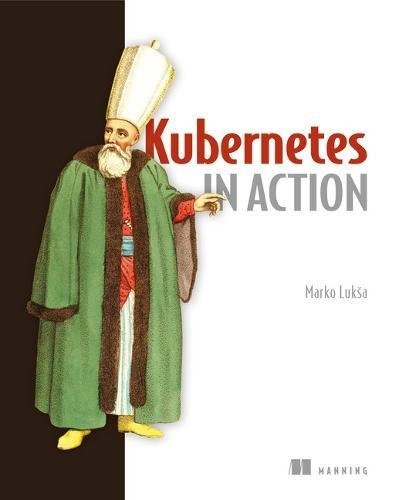
There are dozens of Kubernetes books, but this one stands out because it explains the "why" behind every concept. You don't just learn that a Pod is a group of containers. You understand why Kubernetes uses Pods instead of running containers directly, and what that design decision means for your applications.
The book starts with containers and builds up through Pods, Services, Deployments, StatefulSets, and custom resources. Each chapter includes hands-on examples you run on a real cluster. By the end, you understand the Kubernetes API well enough to debug problems without Googling every error message.
The second edition covers the latest Kubernetes features, but even the first edition is solid on core concepts. If you're working with Kubernetes in any capacity, this book pays for itself the first time you debug a networking issue without spending three hours on Stack Overflow.
Get Kubernetes in Action on Amazon
Practice what you learn: Try our Kubernetes quiz or brush up with the Kubernetes flashcards.
4. The Phoenix Project
Authors: Gene Kim, Kevin Behr, George Spafford
Best for: Understanding why DevOps matters as a culture shift, not just a set of tools
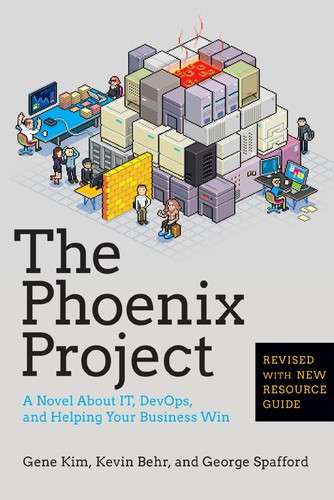
This is a novel, not a textbook. You follow Bill Palmer, an IT manager at a company called Parts Unlimited, as everything falls apart and he has to figure out how to fix it. Along the way, you see the principles behind DevOps play out in a real (fictional) organization.
The book makes abstract concepts click. Flow, feedback loops, continuous learning - these ideas sound vague in a conference talk but make complete sense when you watch a character struggle with a deployment pipeline that takes three weeks.
Read it when you're frustrated with your organization. It's a reminder that the problems you're facing aren't unique, and there's a well-documented path through them. It's also useful ammunition when you need to explain to non-technical stakeholders why DevOps practices matter.
If you enjoy it, follow up with "The Unicorn Project" (same story from a developer's perspective) and "The DevOps Handbook" (the practical companion).
Get The Phoenix Project on Amazon
5. Cloud Native DevOps with Kubernetes
Authors: John Arundel, Justin Domingus
Best for: Engineers moving from "I know Kubernetes basics" to "I need to run this in production"
This is the book you read after Kubernetes in Action. It covers the gap between knowing how to write a Deployment manifest and actually running a production system: secrets management, CI/CD integration, observability, security policies, and cost optimization.
The authors take a practical approach. Every recommendation comes with working code and real configuration files. The chapters on monitoring with Prometheus and logging with Fluentd are particularly good because they show complete setups, not just snippets.
What I appreciate most: they're opinionated. Instead of listing five ways to handle secrets and leaving you to figure out which one to use, they tell you which approach works best and why. That saves you from the "analysis paralysis" that hits every team building their first production Kubernetes platform.
Get Cloud Native DevOps with Kubernetes on Amazon
Keep learning: Explore our Kubernetes exercises, interview questions, and games for more hands-on practice.
What to Read First
If you're new to DevOps, start with the Linux DevOps eBook Bundle and The Phoenix Project. One gives you the technical foundation, the other gives you the cultural context.
If you're already working in DevOps and want to level up, go with Site Reliability Engineering and Kubernetes in Action.
If you're building production systems today, Cloud Native DevOps with Kubernetes is the most immediately useful.
For the complete collection of recommended DevOps reading, check out our DevOps Books page where we maintain a curated list across all categories.
Disclosure: Some links in this post are affiliate links. We may earn a commission at no extra cost to you. This helps support DevOps Daily and keep our content free.
Try it hands-on
Run the commands from this article in the browser. Nothing to install.
Kubernetes Terminal Simulator
Practice Kubernetes commands in an interactive browser terminal. Learn kubectl contexts, nodes, Pods, Deployments, Services, rollouts, logs, exec, events, ConfigMaps, and cleanup workflows with a live cluster visualization.
Learn Linux - Interactive Tutorial
Master essential Linux commands through interactive lessons. Practice pwd, ls, cd, cat, grep, chmod, pipes, and more in a simulated terminal environment with 6 progressive lessons.
We earn commissions when you shop through the links below.


Svix
Webhooks as a service
Svix Dispatch sends your webhooks for you: retries with exponential backoff, signed payloads, idempotency keys, and a delivery log your customers can see.


Atomsized
AWS platform engineering and GitOps
Design and automation for reliable AWS and Kubernetes platforms, safer delivery workflows, and preview and UAT environments your engineers can understand and own.

DigitalOcean
Cloud infrastructure for developers
Simple, reliable cloud computing designed for developers

DevDojo
Developer community & tools
Join a community of developers sharing knowledge and tools

SMTPfast
Developer-first email API
Send transactional and marketing email through a clean REST API. Detailed logs, webhooks, and embeddable signup forms in one dashboard.

QuizAPI
Developer-first quiz platform
Build, generate, and embed quizzes with a powerful REST API. AI-powered question generation and live multiplayer.
Want to support DevOps Daily and reach thousands of developers?
Become a SponsorTags
Found an issue?
Related Posts
Also worth your time on this topic
10 GitHub Repositories That Will Actually Teach You DevOps in 2026
Most "top DevOps repos" lists are recycled awesome-list links. This one is a curated set of repositories that will move the needle on your DevOps skills, with star counts, who each one is for, and how to actually use it.
Helm Charts and Kubernetes Package Management
Learn Kubernetes application deployment and management using Helm charts with templates, values, and lifecycle management.
90 minutes
Argo CD Multi-Environment Repository Structure Checklist
How to organize your Git repositories when running Argo CD across dev, staging, and production. Covers folder layout, app-of-apps, ApplicationSets, secrets, RBAC, and promotion flow.
60-90 minutes